Skip to content
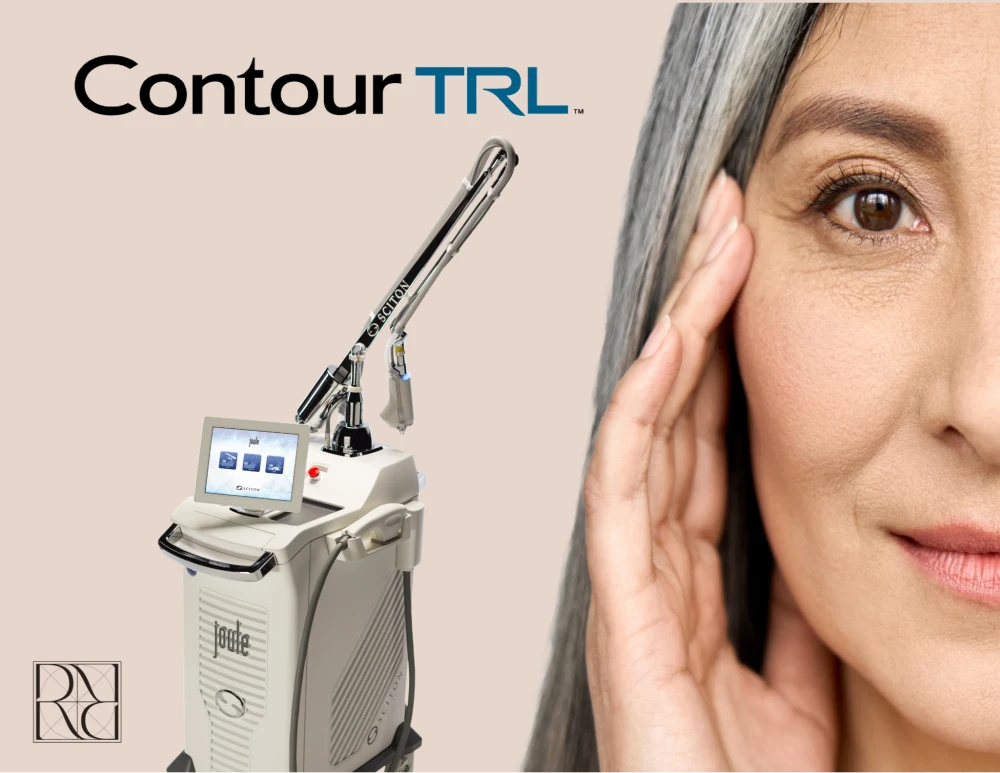
Sciton Contour TRL: The Deep Resurfacing Treatment That Actually Earns Its Downtime
If you have ever said, “I want real change, not just a little glow,” Sciton Contour TRL may be the treatment you are imagining without knowing its name.
Contour TRL is a deep resurfacing erbium laser that can soften etched lines, smooth rough texture, improve scars, and dramatically refresh the surface of the skin. It also comes with honest downtime. In a world of short “lunchtime” procedures, asking your skin to fully regenerate over 10 to 14 days can sound intense, but for many people it is one of the most efficient ways to get meaningful and long lasting results.
At Ritual by Tracy Holzman NP-C in Washington DC, we now offer Sciton Contour TRL as part of our laser and light portfolio for patients who are ready for a true reset.


Who Is This Treatment For?
- You have deeper lines, etched wrinkles, or significant sun damage
- You are tired of doing only light treatments that give small changes
- You can plan for real downtime and want to understand what that looks like
- You live in or near Washington, DC and want a medical practice to walk you through deep resurfacing in plain language
What Is Sciton Contour TRL?
Sciton Contour TRL (Tunable Resurfacing Laser) is an erbium based laser that removes a controlled depth of the skin’s surface to reveal fresher, smoother, and more even skin underneath. It can be adjusted from a very light peel to a very deep resurfacing, depending on your needs.
At deeper settings, TRL is designed to treat:
- Etched lines around the mouth, sometimes called smoker’s lines or barcode lines
- Deeper lines on the cheeks and lower face
- Advanced sun damage and texture changes
- Certain types of scars and crepey skin
Think of it as the “big reset” laser in the Sciton family. Where BBL, Moxi, and Halo focus on pigment, texture, and collagen with shorter downtimes, TRL goes in and carefully removes more of the damaged surface that has built up over time.
How TRL Works Without Getting Too Technical
Contour TRL uses erbium laser energy to precisely vaporize a measured depth of the outer skin. Because it is tunable (adjustable), your provider can choose how deep to go in different areas:
- More depth where lines and texture are worse
- Less depth where the skin is thinner or more sensitive
By removing that damaged layer, TRL:
- Stimulates a strong healing response
- Triggers new collagen formation
- Allows new skin to form that is smoother, more even, and brighter
Your skin has to go through a full cycle of injury, repair, and regeneration. That is why true TRL resurfacing involves more downtime than lighter treatments. It is not a complication. It is the process working.
What Makes TRL Different From Other Lasers?
Compared with our other Sciton options:
- BBL targets pigment and redness with minimal surface injury
- Moxi creates tiny micro zones on the surface for light to moderate texture and pigment
- Halo combines deeper and surface wavelengths for a strong but still fractional resurfacing
- Contour TRL can go deeper and more precisely into the surface itself, removing damaged tissue rather than only creating micro channels
Because TRL can remove more of the damaged surface at once, the trade off is a more visible healing period. For the right patient, this is not a downside. It is an efficient investment. You give the skin one focused window to regenerate instead of chasing small changes over many light treatments.
The Truth About TRL Downtime: 10 to 14 Days of Real Healing
This is the part that matters most. TRL is not a quick “weekend peel.” When we are honest about downtime, patients are much happier with their decision and their result.
Here is what a typical healing window may look like for a deeper TRL treatment to the face. Exact timing can vary based on depth, area treated, and your personal healing.
Days 0 to 3: Fresh Treatment and Intense Care
- Right after treatment, the skin is very red, swollen, and weeping.
- You will have a thick ointment barrier on the skin.
- Sleeping with your head elevated and strict aftercare are essential.
- You will not want or be able to wear makeup.
- Most people stay home and focus on healing during these first days.
This is the most intense part of the process and the one that requires the most commitment.
Days 4 to 7: Peeling, Itching, and Visible Transition
- The top layers begin to peel and slough.
- The skin may look patchy, dry, and tight in some areas.
- Redness is still present, but the raw look starts to shift.
- You continue with cleansing, soaks if prescribed, and ointments or healing products.
This is when you might feel like it is taking forever. It is not. Your skin is actively rebuilding and laying down new tissue.
Days 8 to 14: Fresh Skin and Ongoing Redness
- New skin covers the treated areas.
- You may be able to transition to lighter products as directed.
- Redness and a pink tone are common and can last beyond day 14.
- Many people feel comfortable going back to work or public life with makeup, if cleared by the provider.
By day 10 to 14, your skin has done an enormous amount of work. It may still be pink, but that pink is new, regenerating tissue. That is a sign that the treatment has reached a level where lasting change is possible.
In the context of how long it took to create the damage — years of sun and movement — asking the skin to regenerate in about two weeks is actually a short time frame.
Why 14 Days Is Not “Too Long” For What You Get
Deeper etched lines and heavy sun damage did not show up overnight. They are the result of years of UV exposure, movement, and gradual collagen loss.
Light treatments can help, but they often only skim the surface. With TRL:
- You are removing a meaningful portion of damaged tissue in one treatment
- You are stimulating a strong collagen response
- You are giving yourself a reset that would be hard to achieve with only lighter options
When you look at it that way, devoting 10 to 14 days to healing is more like taking a short, focused break to gain years back in skin quality.
We plan these treatments around your life, not before big events, travel, or major work deadlines. For many patients in Washington DC who are planners by nature, this fits their mindset. They would rather invest fully once than constantly chase small improvements with very limited change.
Who Is a Good Candidate for TRL?
Sciton Contour TRL may be a good option if:
- You have etched lines around the mouth or on the cheeks that have not responded enough to lighter treatments
- You have significant sun damage or rough texture that bothers you daily
- You are willing and able to take real downtime, not just a weekend
- You are healthy, a nonsmoker or willing to follow strict guidance, and able to follow aftercare
- You understand that redness can persist for weeks even after the surface has healed
It may not be ideal if:
- You cannot take time away from public facing roles
- You cannot keep the skin protected from sun during healing
- You are unable to commit to strict aftercare and follow up
These are exactly the things we talk through during a consultation.
Long Term Results and What To Expect After You Heal
Once your skin has resurfaced and the pink tone fades over weeks to months, most people notice:
- Smoother texture and fewer etched lines
- Softening of wrinkles around the mouth and lower face
- Brighter, more even tone
- Tighter, more refined looking skin surface
Results are long lasting, especially with good sunscreen use, medical grade skincare, and if needed, maintenance treatments like BBL or lighter resurfacing in the future.
Think of TRL as a major renovation. After that, you can often maintain with smaller touch ups rather than constantly starting from a place of heavy damage.
How We Use Sciton TRL at Ritual
At Ritual by Tracy Holzman NP C in Washington DC’s West End, Contour TRL is not a casual add on. It is a carefully planned procedure performed or overseen by board certified nurse practitioners with advanced training in laser resurfacing.
We:
- Evaluate your skin type, history, and goals in detail
- Discuss realistic expectations and show you where TRL fits compared with Sciton BBL, Moxi, and Halo
- Plan the timing of your treatment around work, life, and events
- Provide clear written and verbal aftercare instructions and follow up
When patients understand what TRL can do and what the healing process truly looks like, the 10 to 14 day window becomes less scary and more purposeful. It is not “being out of commission.” It is giving your skin the chance to rebuild in a way that lighter treatments simply cannot match.